Popular Kaomoji in 2025: Reading Faces Across Cultures
Published · English edition: October 14, 2026 · KawaiiEmoji Editorial Team
Explore the expressions discussed in our 2025 Simeji survey coverage and why the same face can carry different tones.
A report about a particular survey
Our Japanese article, published on October 10, 2025, discussed a Simeji survey across 16 countries. It highlighted •᷄ࡇ•᷅ in the worldwide results and ^_^ in Japan. These are findings from that survey rather than a count of every chat message worldwide.
This English edition focuses on how to read the faces and the cultural interpretations in that coverage. It does not present a new 2026 ranking.
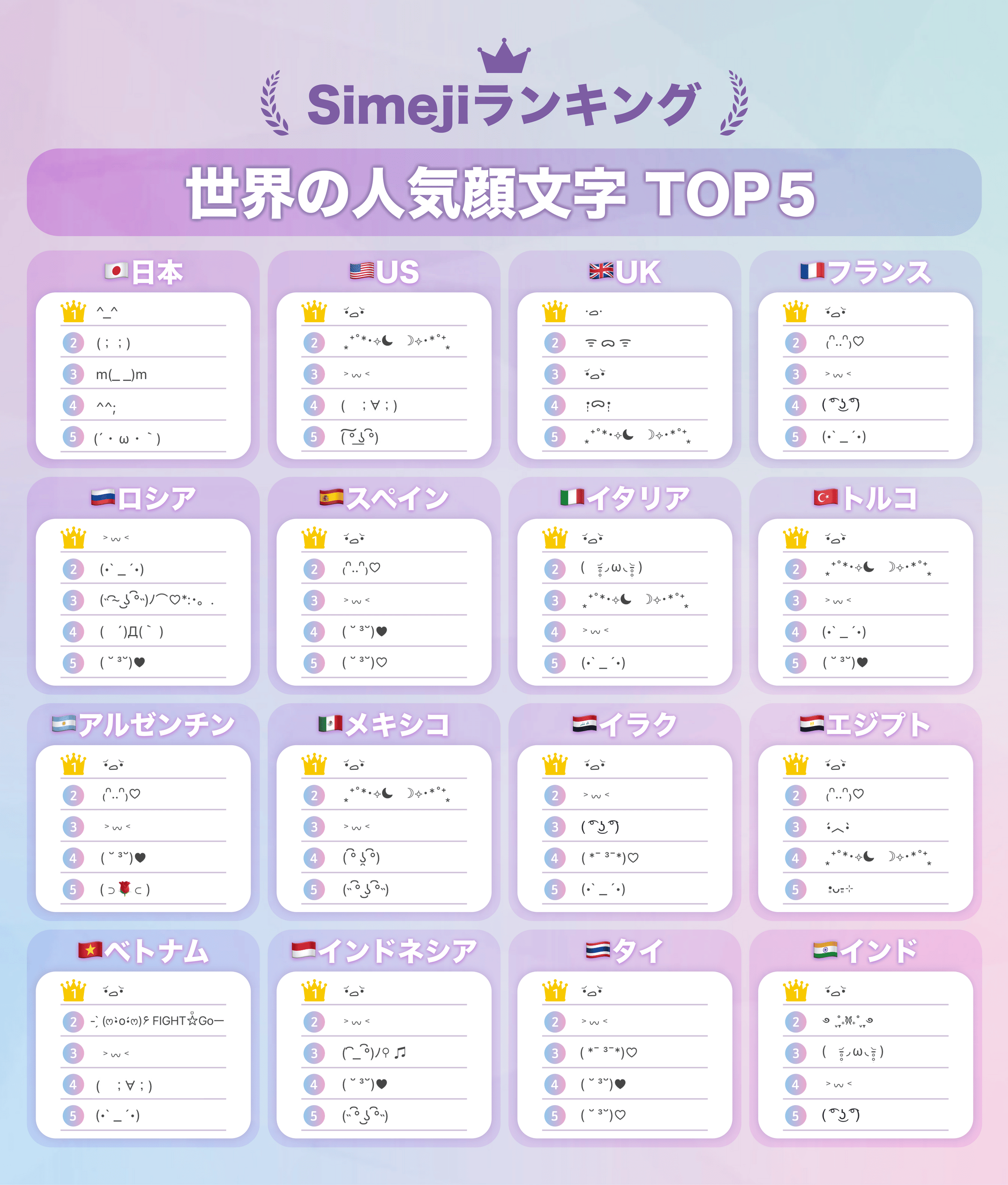
The ambiguous face •᷄ࡇ•᷅
The expression can suggest confusion, awkwardness, frustration or a self-deprecating reaction. Its usefulness comes partly from that flexibility: it softens an uncomfortable feeling without requiring a long explanation.
A face can become familiar in a community while still carrying different meanings for individual readers. Words around it help the recipient understand the tone.
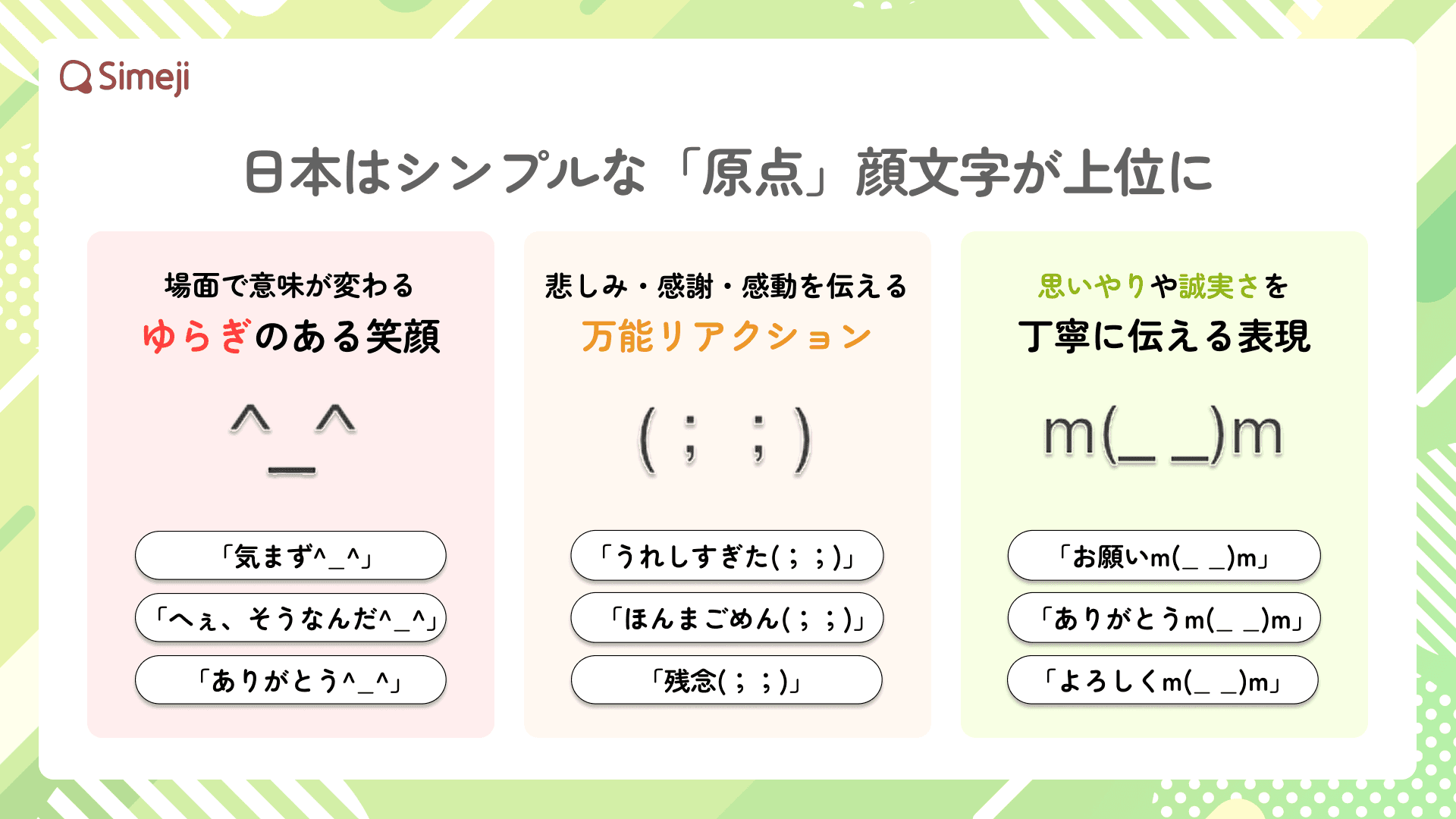
The familiar smile ^_^
The two raised eyes form a simple smile. It can be a warm greeting or a friendly acknowledgment, but in some casual exchanges it can also be teasing or ironic.
The original article discusses differences across generations. Those interpretations describe patterns in that coverage; they do not tell you exactly what any individual means.
Simple faces with a long life
(;;) communicates tears, and m(_ _)m looks like a bow. Their simple shapes can be easy to recognize. Tears may express thanks or being moved as well as sadness; a bow can be a request, an apology or gratitude.
Culture and context change the reading
A decorated face can add personality to a profile, while a small reaction can soften a chat reply. Online communities, language and relationships all affect how a face is understood.
Avoid choosing a face only because a ranking calls it popular. Pick an expression that fits what you want to say and the person who will receive it.
Try the expressions yourself
Start with a short face and a clear sentence. If a reaction feels ambiguous, add a word such as “thanks”, “oops” or “happy” so the emotional cue has context.